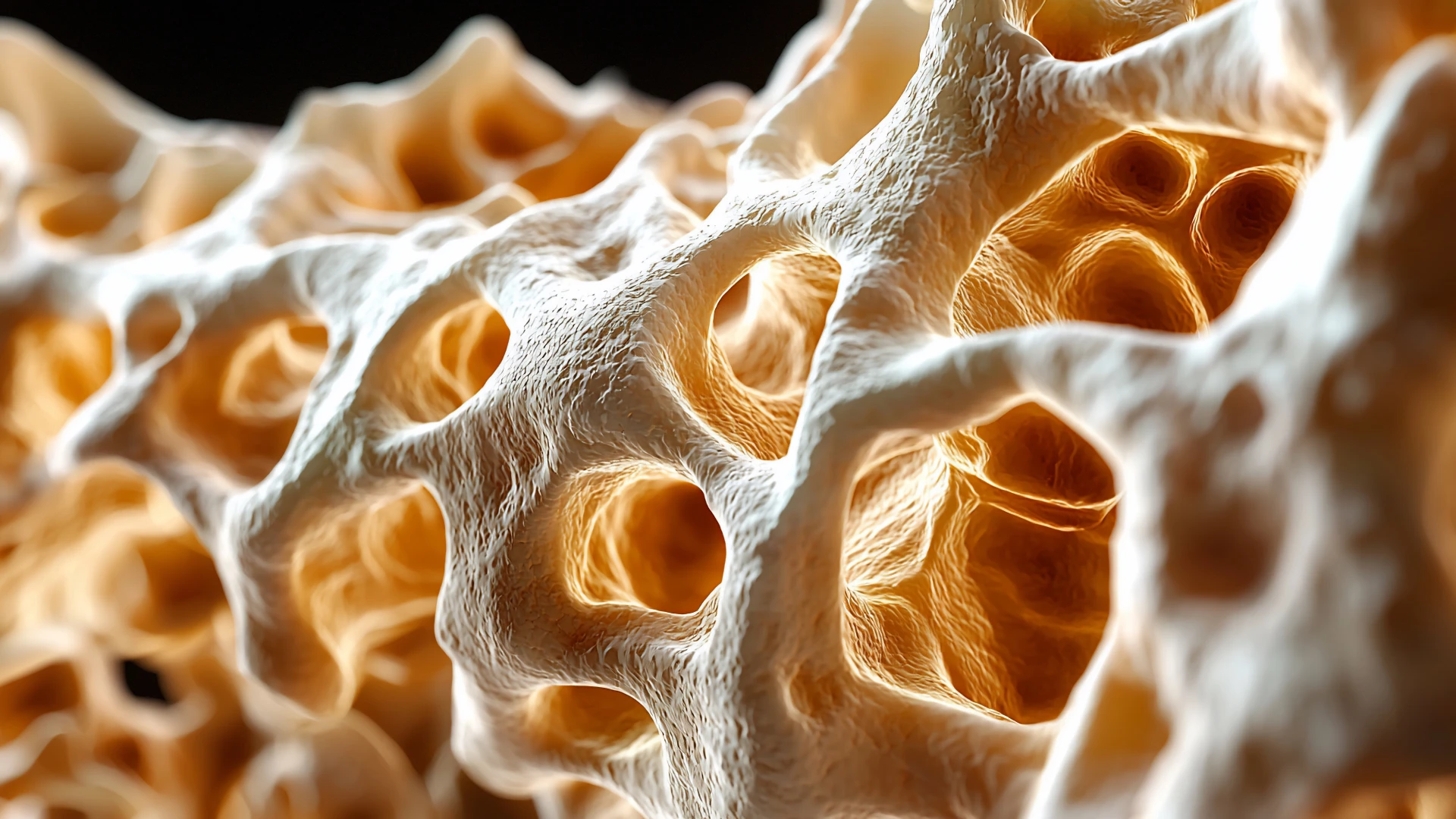
Silk possesses extraordinary natural qualities: it is light, soft and absorbs moisture. A single silk thread has the same strength as a steel wire of the same thickness.
Thanks to these characteristics, silk is increasingly and successfully used in the energy sector, in the optical industry and, in particular, in medicine for the reconstruction of damaged tissues of the human body.
The biocompatibility of silk
One of the main advantages of silk is its biocompatibility. This natural fibre is well tolerated by the human body, minimising the risk of adverse immune reactions. In addition, silk is biodegradable, which makes it ideal for temporary applications such as implants and scaffolds for tissue regeneration.
Silk is mainly composed of fibroin, a protein that possesses excellent mechanical properties and a structure that can be easily modified. This versatility allows researchers to engineer silk to obtain the porosity and strength required to support the growth and differentiation of haematopoietic stem cells, the cells that give rise to all blood cells.
Silk and bone marrow models
Bone marrow is a complex tissue that hosts haematopoietic stem cells, responsible for the production of all blood cells. Recreating a functional bone marrow environment in the laboratory is a significant challenge. Thanks to the extraordinary properties of silk, researchers from Harvard University and the University of Pavia, in collaboration with Tufts University in Boston, have developed a three-dimensional bone marrow model entirely built from silk that faithfully replicates the natural environment of these cells.
One of the main challenges in haematological research is the production of platelets ex vivo in order to study diseases that involve them and to transfuse them to those in need. This model makes it possible to study the mechanisms of platelet production under both physiological and pathological conditions, identifying new therapeutic targets. Examining different platelet production conditions allows researchers to compare various mechanisms of cellular synthesis, in order to identify possible strategies for preventing or treating blood disorders.
Silk was chosen for the creation of the 3D bone marrow model precisely because, as previously mentioned, silk is a fibrous protein with high mechanical strength. Known primarily for its use as a suture thread, silk has demonstrated significant potential in other biomedical fields as well. It is currently being studied for ligament regeneration, membrane formation and as a wound dressing.
Future applications
The use of silk in medicine to develop bone marrow models could revolutionise medical research and clinical therapies. These models can be used to test new drugs, study haematological diseases and develop personalised treatments. Furthermore, they could contribute to the creation of engineered bone marrow implants for transplants, offering a solution to the shortage of compatible donors.