In a time when we are witnessing deforestation and fires affecting the Amazon rainforest, the lungs of the planet, it becomes even more important to highlight and promote the use of natural fibres that respect the environment and help give a future to our existence.
Traditional natural fibres are divided into fibres of plant origin (among the most well-known are cotton, linen, hemp, jute and ramie) and fibres of animal origin. The latter include silk produced by silkworms and wool obtained from the fleece of various species of sheep, rabbits and camelids, which can be of different types, such as cashmere, mohair and angora.
Knowing how to recognise these fibres and appreciate their qualities is essential in order to become active participants in conscious purchasing.
The sustainability of silk
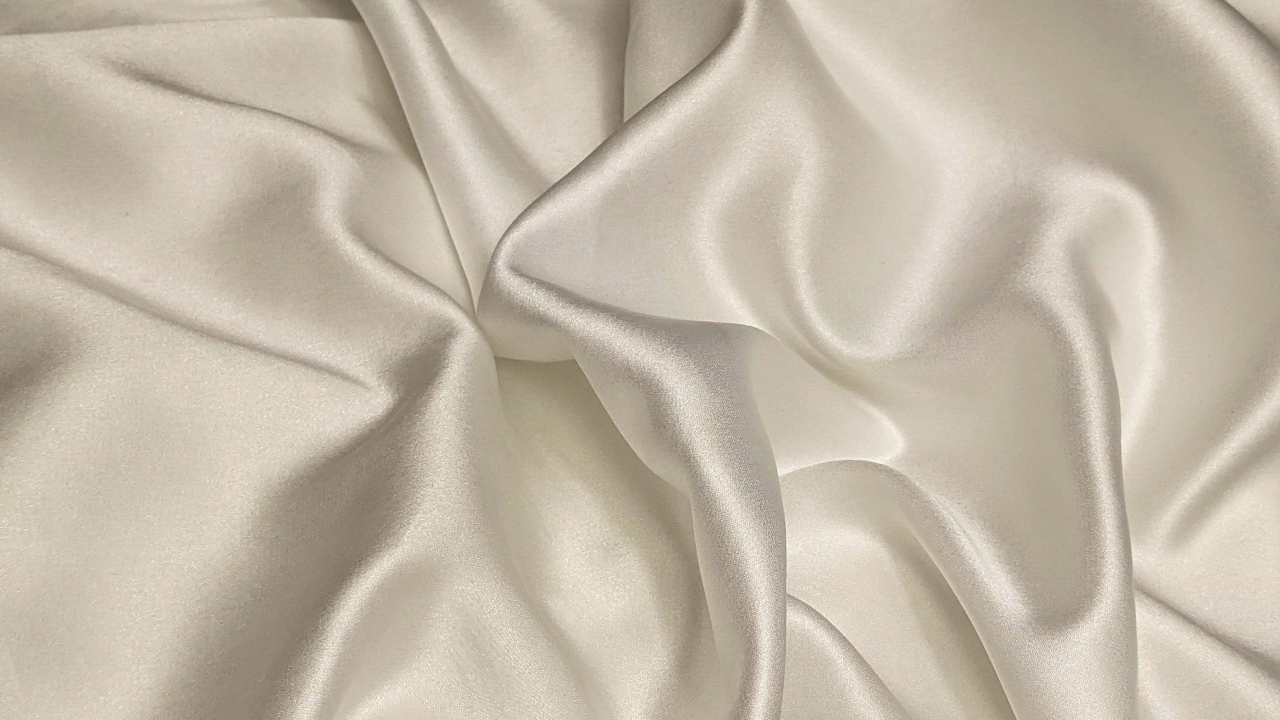
Among all natural fibres, silk is recognised for its lustre, which makes it precious and highly appreciated in fashion. But silk is also a sustainable fibre: it is well known that producing silk requires the cultivation of mulberry plants without pesticides to feed the silkworms. These crops produce oxygen and absorb carbon dioxide, making the environment more breathable. Moreover, agricultural production also has a social and economic sustainability function, as it creates a virtuous cycle that provides work and resources to the less affluent groups within the primary sector.
Silk, in addition to being precious, is also a natural, ecological and green choice.
The freshness of cotton
“Su le nubi dorate e inargentate che paion di bambagia”, wrote Carducci in his poetic work Giambi ed Epodi. Bambagia, which evokes sensations of softness and delicacy, is precisely the soft material that surrounds cotton seeds and from whose processing this widely used fibre is obtained.
Cotton was cultivated in ancient times in the territories that today correspond to India and Peru and arrived in Europe around the year one thousand, although it spread much later. For a long time, in fact, like silk and unlike wool, it was considered a luxury good. Its spread increased rapidly after the conquest of the Americas and between the eighteenth and nineteenth centuries, when the Industrial Revolution gave a strong boost to cultivation and processing technologies: the activity that experienced the greatest technological changes was precisely the cotton industry, which became a fully-fledged industrial sector.
Egyptian Giza cotton is among the most appreciated because it has longer fibres and, in general, among natural fibres cotton is the most widely used. In clothing, organic (or biological) cotton is becoming increasingly common, cultivated and processed with sustainability in mind and without the use of chemical substances. However, it is important to underline that cotton production requires significant quantities of water, which is itself becoming a fundamental resource for our future.
The naturalness of linen
For at least 5,000 years, linen has been cultivated both for its fibre and for its seeds, and today the main producers are countries of the former Soviet Union, China and France. Linen is obtained from the stem of Linum Usitatissimum, a plant whose processing yields the yarn, and it is considered the only textile fibre of European origin.
Over time, linen has repeatedly suffered competition from other materials: until the early nineteenth century it was much more widespread than cotton, but the introduction of looms that facilitated cotton processing increased cotton production at the expense of linen. In more recent periods, linen has also been replaced by alternative synthetic products, but like silk, it possesses an intrinsic lustre and softness highly appreciated in the worlds of fashion and interior design, which will continue to make it a highly prized fibre.
The warmth of wool
Wool is a natural fibre of animal origin, obtained from the fleece, that is, the woolly coat of sheep and other ovine species, which after shearing is processed until yarn is obtained. As early as 4000 BC, the Babylonians were spinning wool, but it became a precious commodity for trade and consumption in the twelfth century. Australia, New Zealand and China are today among the main producers.
Throughout its history, Italy too can boast a glorious tradition in wool processing, considered a true artisanal art, at least until the advent of mechanical looms during the Industrial Revolution.
Like other natural fibres, wool suffers from the spread of other fabrics, especially synthetic ones, but there are Italian excellences, such as Brunello Cucinelli, who from Umbria spreads the culture of cashmere processing throughout the world. Or the consortium Biella the Wool Company, in Piedmont, which, as founder Carmine De Luca states, focuses on enhancing native Italian wools, offering small producers the opportunity to transform wool into quality yarns and fabrics in a context of full traceability and respect for the environment.
Natural, conscious and sustainable consumption choices
Just as when choosing food or ingredients, it has become essential to know the origin of the materials from which our clothing, household linen and textiles in general are made. Millennials are the generation that more than any other is experiencing this shift in perspective towards more conscious use and consumption, but regardless of age or generation, curiosity, knowledge and information are the foundations for building a better world.