Silk in fashion: 3 iconic garments
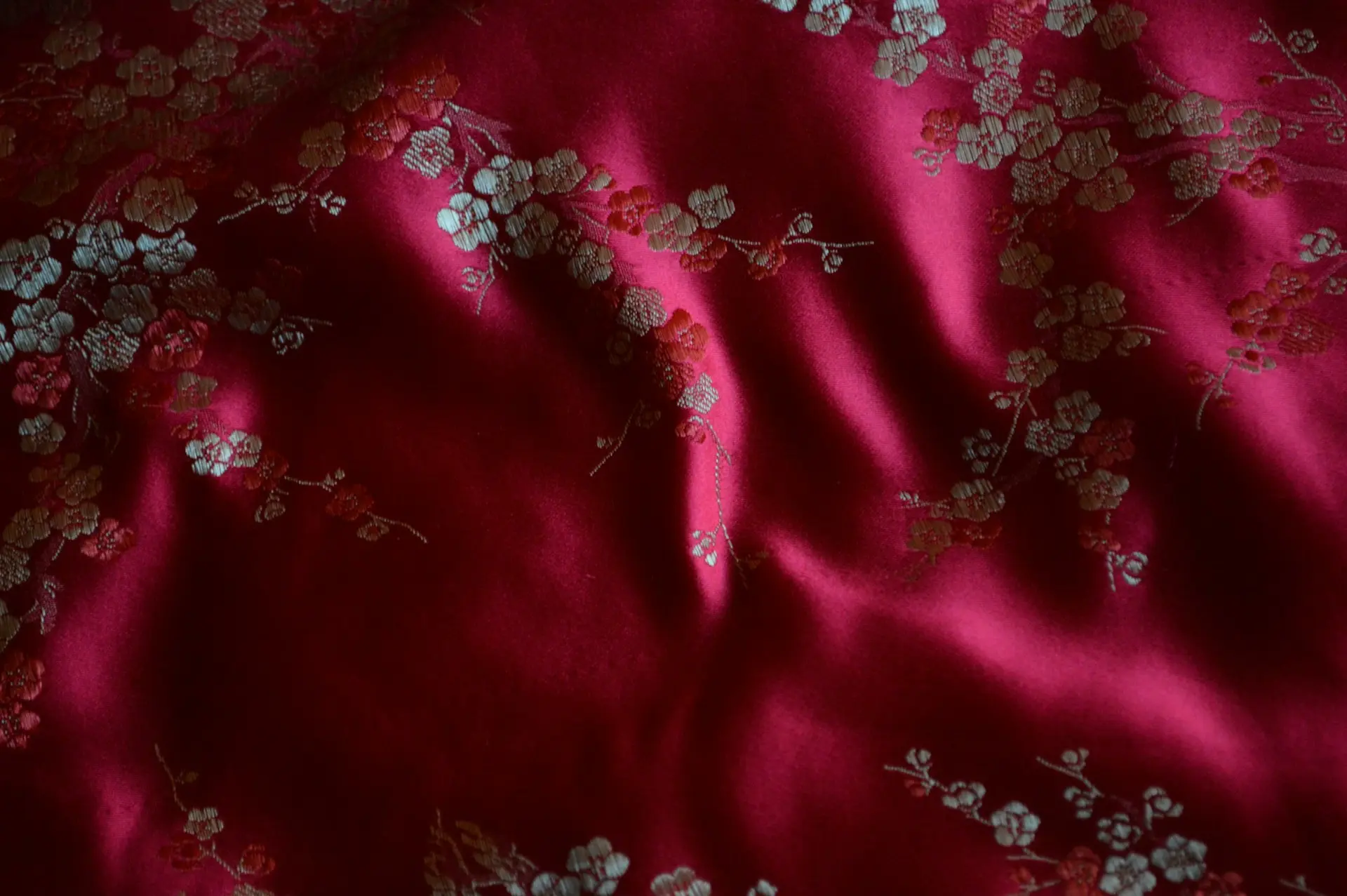
Silk is closely linked to the history of fashion. Renowned maisons and historic companies have elevated it as one of the most emblematic sustainable luxury fabrics, creating iconic garments that have endured from the past to the present, unchanged in their preciousness and recognizability. These garments themselves have contributed to the success of fashion houses, becoming their symbols and interpreting their values.
The timeless Hermès scarves
The silk scarf worn around the neck is the garment most strongly associated with silk. Inspired by the scarves worn by Napoleon’s soldiers, it began to be adopted at the end of the eighteenth century by the working and bourgeois classes as a distinctive sign of social status. But it was only in 1937 that it became a true luxury accessory: Émile Maurice Hermès, head of the third generation, together with his partner and son-in-law Robert Dumas, created the first Hermès carré 90×90 “Jeu des Omnibus et Dames Blanches” for the ladies of Paris. Carriages, horses, military exploits and major historical events characterised the scarf designs, which silk made—and still makes—precious objects of fashion and art.
A turquoise silk scarf, elegantly long and narrow;
so delicately traced by a flight of pale gold and silver butterflies
that gazing upon it feels like drifting into a dream.
(Joyce Carol Oates)
Ties from the Italian tradition
As early as the mid-seventeenth century, Louis XIV began wearing lace cravats that became a fashionable accessory among the French nobility, even establishing in 1661 the official role of the King’s Cravat Maker, responsible for choosing and tying the sovereign’s cravats. But the silk tie, in a shape similar to that of today, spread as a variation of the neckerchief between the late nineteenth and early twentieth centuries.
From north to south, Italy boasts a long-standing experience and tradition in the art of tie-making: Como, also known as the “city of silk”, and its textile district are famous worldwide for the production and tailoring of ties; in Naples, the Marinella workshop has helped spread Italian tailoring since the early years of the twentieth century. The workshop of Eugenio Marinella, which initially produced shirts, went on to make almost exclusively ties in fine English silk, because its founder recognised the potential of this accessory, an undisputed symbol of elegance for centuries.
The tie is the man; it is through it that a man reveals and expresses himself.
To know a man, a single glance is enough
at this part of him that connects the head to the chest.
(Honoré de Balzac)
Dior’s white shirt
Years go by and fashions change, but the white shirt remains one of the ultimate symbols of elegance, for both men and women. It was Coco Chanel, in the 1920s, who revolutionised fashion by freeing women from corsets and laces and replacing them with white shirts and buttons. It was Christian Dior, after the Second World War, who introduced the white silk organza shirt, a highly precious garment worn by Hollywood stars.
The white shirt was and remains a timeless myth, so much so that in 2015, in Milan, an exhibition entitled “La camicia bianca secondo me. Gianfranco Ferré” celebrated, through the display of 27 white shirts, one of the Italian designers who helped make it a global style icon.
Then a woman arrives at a dinner wearing black tuxedo trousers
and a white silk shirt, a perfect classic, and you notice her.
She is elegant.
(Franca Sozzani)