Who are Millennials?
The term Millennials refers to the generation born between the early 1980s and the late 1990s, more precisely between 1981 and 1996. Millennials are also known as Generation Y: they are the first to have witnessed the advent of the internet, today they are among the main online consumers and they are an educated and connected generation. Having become the subject of studies and research, Millennials share specific values, including ethics and sustainability, and display consumption behaviours that influence both major and smaller brands.
Millennials and the concept of sustainability
Among the characteristics of the Millennial generation is a strong focus on sustainability: not only are Millennials more interested in ethical solutions than any previous generation, but they are also willing to spend more to purchase sustainable brands and products.
This was reiterated by Nina Gardner of Johns Hopkins University during the annual event of the Global Thinking Foundation: Young people show a strong interest in protecting the planet and are sensitive to environmental issues. Among Millennials, decisions to invest in companies with sustainability goals are twice as high as those of the overall investor population.
But already Philip Kotler, the “founding father of modern marketing”, stated in the 2001 edition of his book Principles of Marketing:
It is clear that in the future companies, in carrying out their marketing and production activities, will have to comply with increasingly high standards in terms of environmental responsibility. Companies capable of creating new values and practising socially responsible marketing will have an entire world to conquer.
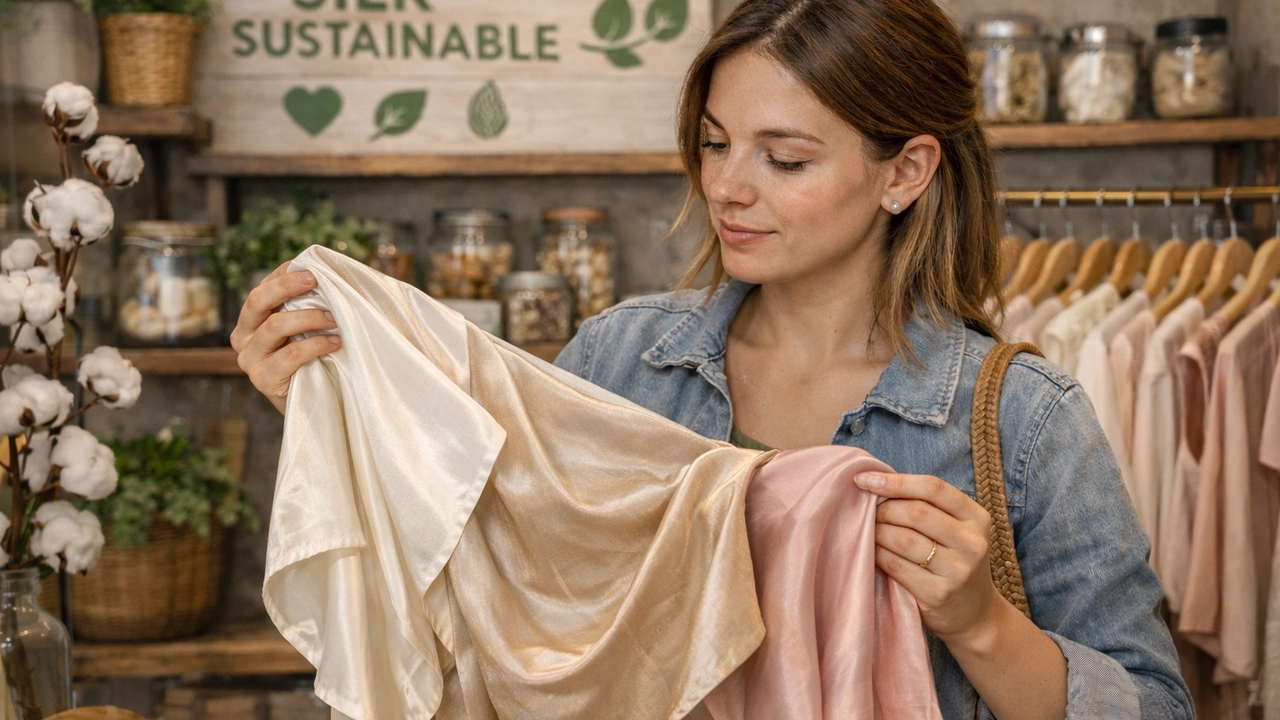
Millennials and the image of silk
The relationship between Millennials and silk fits into this favourable context.
Silk is a sustainable product for two reasons: first of all, because producing silk requires mulberry plants grown without pesticides to feed the silkworms. Secondly, because these plantations, through photosynthesis, produce oxygen and absorb carbon dioxide, making the environment more breathable. In this context, sustainable silk sourcing — which involves controlled supply chains, responsible farming, and environmentally conscious production practices — becomes a key element in defining its ethical value.
But are Millennials aware of this?
The International Silk Union (ISU), an international organisation that promotes communication and cooperation within the silk industry, coordinated in 2018 the survey “Millennials and Silk – International Survey of ISU” to measure, among Millennial women, their knowledge of silk and their positive behaviour towards sustainability in fashion. The results highlighted that for Millennials silk is expensive and exclusive, but at the same time it is identified as “slow fashion” and close to the idea of “responsible consumption”.
Therefore, in the minds of Millennials, the image of silk is very positive, and this has confirmed the existence of a challenge for fashion brands that want to win over this generation: focusing on silk garments which, in addition to their great aesthetic value, create, carry with them and spread a strong sustainable value.
On 15 March 2019, the global climate movement “Friday for Future” brought students and young people from 98 different countries onto the streets: this demonstrates that interest in environmental issues does not end with the Millennial generation, but is also expressed through the increasingly active participation of younger people, the so-called Generation Z. Today this generation accounts for only 4% of luxury purchases, but between now and 2025 it will grow by four to five percentage points per year (source: True – Luxury Global Consumer Insight, a study conducted by Boston Consulting and Altagamma). For this reason, companies are committing themselves to quickly understanding their tastes and language.